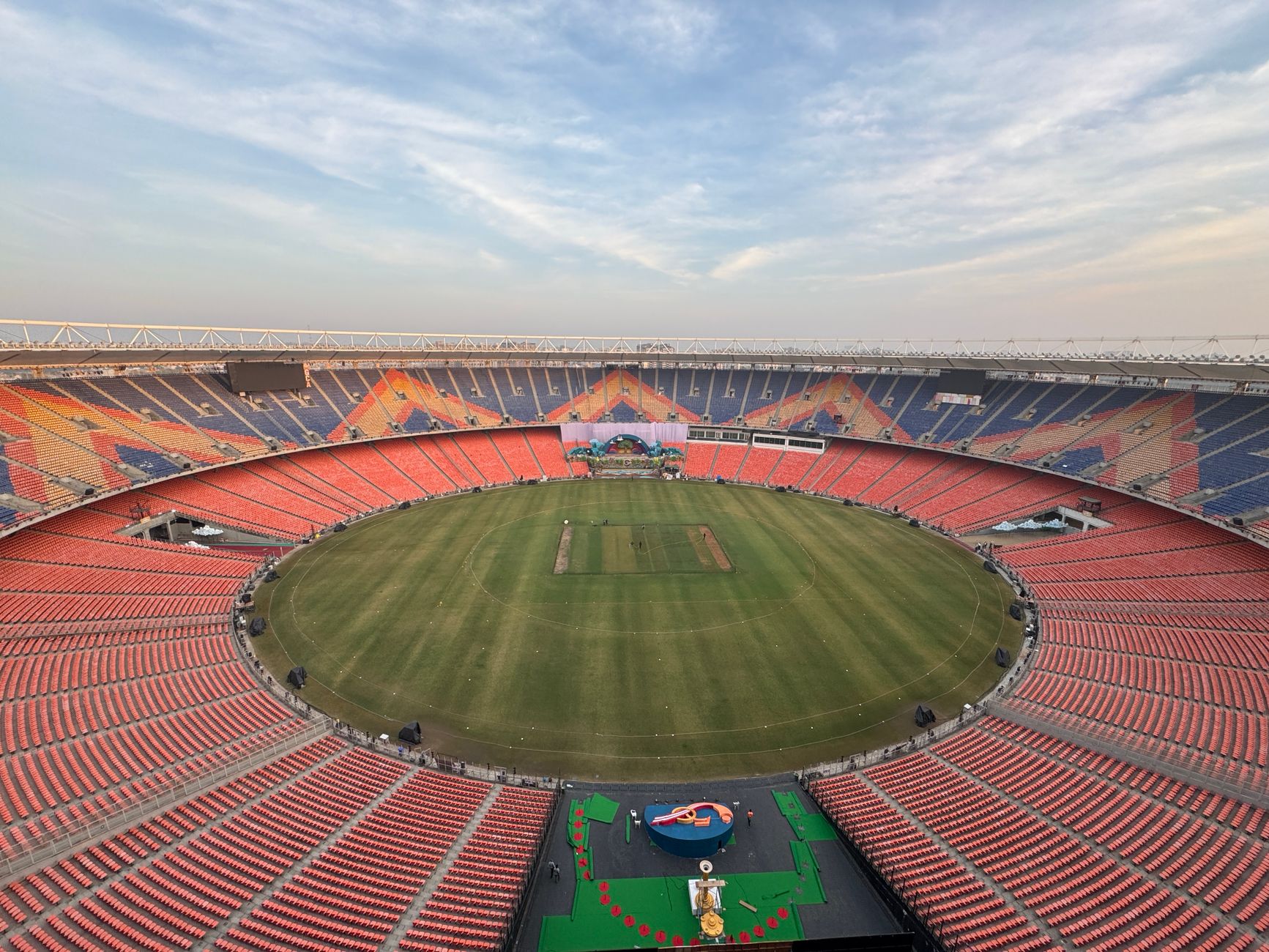
Clive Lloyd's West Indies: A Golden Era of Dominance
Revisiting the legacy of Clive Lloyd's captaincy in West Indies cricket.
8/16/2026
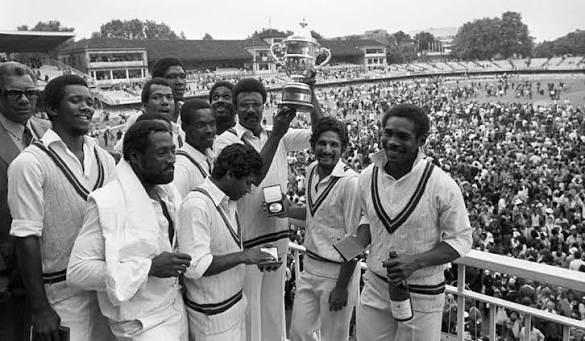
Golden Era of West Indies Cricket Under Clive Lloyd
There was a period in cricket when the West Indies did not merely compete with the world's best teams—they intimidated them. From the mid-1970s through the 1980s, West Indies cricket became synonymous with power, pace, confidence and relentless dominance. At the centre of this transformation stood Clive Lloyd, a towering left-handed batsman whose leadership helped turn an immensely talented group of Caribbean cricketers into one of the most formidable teams in sporting history.
Lloyd captained the West Indies from 1974 to 1985 and led them through an era in which they won two World Cups, established a remarkable unbeaten Test record and developed a fast-bowling attack that would influence cricket for decades. The International Cricket Council describes Lloyd as one of the game's most successful captains and notes that the West Indies went 27 Tests without defeat during this period, including 11 consecutive victories. The West Indies Before Lloyd
The foundations of West Indies greatness had been laid long before Lloyd became captain. Players such as Frank Worrell, Everton Weekes, Clyde Walcott, Gary Sobers and Rohan Kanhai had established the Caribbean side as a major force in international cricket.
But the team of the early 1970s was not yet the dominant machine it would become.
When Lloyd took over the captaincy in 1974, he inherited talented players but also a side that needed a new identity. His first major assignment was the tour of India in 1974–75. The West Indies won the series 3–2, with Lloyd producing a monumental 242 not out in the decisive Test in Bombay. Gordon Greenidge had also announced himself with a century on debut, while a young Vivian Richards was beginning his international career.
That tour became an important starting point for the Lloyd era. The Birth of a New West Indies
The transformation was not simply about winning matches. Lloyd understood that the West Indies needed a distinctive style of cricket.
The turning point came during the 1975–76 tour of Australia. The West Indies were beaten heavily, losing the six-Test series 5–1. Rather than simply accepting defeat, Lloyd studied what had made Australia so effective.
The Australian fast bowlers Dennis Lillee and Jeff Thomson had demonstrated the psychological and tactical power of extreme pace. Lloyd recognized that the Caribbean possessed the raw material to build something similar—and potentially even more devastating.
According to Cricket West Indies, Lloyd was heavily involved in reinventing the West Indies as a fast-bowling powerhouse after that Australian defeat. He saw the hostility and pace of Lillee and Thomson as essential ingredients and began assembling attacks that would dominate batsmen for the next two decades.
This decision changed cricket. The Fast-Bowling Revolution
The greatest weapon of Lloyd's West Indies was pace.
Andy Roberts was among the first stars of the new generation. He was followed by Michael Holding, Joel Garner, Colin Croft, Wayne Daniel, Sylvester Clarke, Malcolm Marshall and others.
What made the attack extraordinary was not simply the speed of individual bowlers. It was the ability to rotate several world-class fast bowlers without giving the batsman any opportunity to escape.
There was no easy over.
Holding could glide into his delivery stride and produce frightening pace with apparently effortless action. Roberts combined intelligence with hostility and variations. Garner used his exceptional height and awkward angle to make life difficult. Later, Marshall brought a devastating combination of pace, movement and tactical intelligence.
Instead of relying on one superstar bowler, Lloyd created an assembly line of fast bowling.
That became the defining characteristic of West Indies cricket. The 1975 World Cup
The first major international confirmation of Lloyd's leadership came in the inaugural Cricket World Cup in England in 1975.
The West Indies reached the final against Australia at Lord's.
Lloyd then produced one of the most important innings in the early history of one-day international cricket.
Coming in with his side in trouble, he scored 102 from just 85 balls. His innings transformed the final and helped West Indies establish a competitive total. They eventually defeated Australia by 17 runs to become the first World Cup champions.
It was more than a trophy.
It announced that the Caribbean side had arrived as a dominant force in the new format. Vivian Richards and the Rise of the Superstars
Lloyd's greatest achievement as captain was arguably his ability to manage an extraordinary collection of personalities.
Vivian Richards became the symbol of West Indian confidence.
Richards was aggressive, fearless and intimidating without needing to say much. His batting could destroy bowling attacks, particularly when he decided to counterattack.
Gordon Greenidge and Desmond Haynes formed one of the great opening partnerships in Test history. Larry Gomes provided stability in the middle order. Jeff Dujon became an important wicketkeeper-batsman.
And behind them stood an extraordinary bowling attack.
Lloyd's role was not to overshadow these players. It was to create an environment in which they could perform at their maximum level. The 1979 World Cup
Four years after winning the inaugural World Cup, Lloyd's West Indies returned to defend their title.
The 1979 tournament again ended with West Indies in the final, this time against England.
Vivian Richards produced a brilliant innings of 138 not out, while Collis King provided explosive support with 86. England were unable to chase the target, and West Indies won by 92 runs.
Lloyd therefore became the captain of the first team to win the World Cup twice.
The ICC records both the 1975 and 1979 World Cup victories as two of the defining triumphs of Lloyd's captaincy. From Great Team to Unbeatable Team
The late 1970s and early 1980s saw the West Indies evolve from world champions into an almost unbeatable Test side.
Their formula was brutally simple.
Score enough runs.
Then unleash four fast bowlers.
The opposition could not afford to relax against the top order, because Greenidge, Haynes, Richards and Lloyd could all produce match-winning innings.
But surviving the West Indies batting attack was only the beginning.
Then came the fast bowlers.
A batsman might survive Roberts only to face Holding. After Holding came Garner. Later Marshall entered the attack. There was no obvious weak link.
This was not merely a collection of talented individuals. It was a system. The Famous 1980s Dominance
Under Lloyd, West Indies became the dominant Test nation of the era.
Lloyd's overall captaincy record was extraordinary: he led the West Indies in 74 Tests, winning 36, losing 12 and drawing 26. His tenure ran from 1974 to 1985.
But the raw numbers do not fully explain the psychological impact of the team.
Opponents increasingly approached West Indies matches knowing they were facing an enormous challenge.
The West Indies were particularly ruthless away from home. They were not dependent on friendly Caribbean conditions. Their pace attack travelled extremely well, and their batsmen had the technique and temperament to perform overseas.
That made them different from many earlier dominant sides. The 1984 England Series
One of the clearest demonstrations of West Indies dominance came in England in 1984.
West Indies won the five-Test series 5–0.
The result became famous as the "Blackwash."
It demonstrated the complete maturity of the Lloyd-era team. West Indies could win through batting, pace bowling, pressure and superior fielding.
England were overwhelmed.
The series also reinforced the psychological reputation of the Caribbean side: once West Indies gained control, they rarely allowed opponents back into the match. The 1984–85 Australia Tour
Perhaps the perfect final chapter of Lloyd's captaincy came in Australia.
The West Indies toured Australia in 1984–85 and won the five-Test series 3–1. They won the first three Tests before the fourth ended in a draw.
The series was significant because Australia had historically been one of the hardest places for touring teams to dominate.
Yet Lloyd's West Indies did it with authority.
Clive Lloyd scored 356 runs in the series, while Malcolm Marshall took 28 wickets, Joel Garner 19 and Michael Holding 15.
The series also brought an end to the West Indies' extraordinary run of 11 consecutive Test victories, when Australia held on for a draw in Melbourne.
By then, Lloyd had already created a cricketing empire. The Eleven-Test Winning Streak
The 1984 winning streak remains one of the defining achievements of the era.
West Indies won 11 consecutive Test matches under Lloyd, a record that stood until Steve Waugh's Australia surpassed it in the late 1990s and early 2000s.
The significance was not simply statistical.
Test cricket is a format built around uncertainty. Matches can last five days, conditions change and individual performances fluctuate.
To win 11 consecutive Tests required extraordinary consistency.
The West Indies had it. Lloyd the Leader
Clive Lloyd was not the stereotypical image of a fiery captain.
His leadership was based more on authority, confidence and trust.
At 6 feet 4 inches, wearing glasses and possessing an imposing physical presence, Lloyd naturally commanded attention. But his greatest contribution was tactical and cultural.
He understood that his team needed confidence.
He encouraged his players to believe they were the best team in the world—and then built a team capable of proving it.
His leadership also extended beyond tactics. He created a culture in which fast bowlers were celebrated and developed. The Caribbean had enormous natural talent, and Lloyd helped turn that talent into a sustained cricketing system. The Importance of the Caribbean
The West Indies team represented something larger than a conventional national side.
The players came from different Caribbean nations and territories, including Jamaica, Barbados, Guyana, Trinidad and Tobago and others.
They were united under the West Indies banner.
During the Lloyd era, that unity became a powerful sporting identity.
The team's success created enormous pride throughout the Caribbean. Players became national heroes, while the West Indies style of cricket became a cultural symbol.
The fast bowlers in particular represented confidence and independence.
They were not merely trying to survive against the established cricket powers.
They were dominating them. Clive Lloyd the Batsman
It is easy to remember Lloyd primarily as a captain, but he was an outstanding batsman in his own right.
He played 110 Tests between 1966 and 1985, scoring 7,515 runs at an average of 46.67, including 19 centuries. His highest score was 242 not out.
His batting style suited the personality of the West Indies team.
He was powerful rather than ornamental.
His cover drives were particularly memorable, and his ability to attack when his team needed momentum made him an ideal leader.
His 242 not out against India in 1975 was an early indication of what his captaincy would become.
His 102 in the 1975 World Cup final demonstrated that his leadership could also be expressed through decisive individual performances. The End of the Lloyd Era
By 1985, Lloyd's playing career was coming to an end.
He had captained the West Indies for 74 of his 110 Tests, more than any other West Indies captain.
He handed over the captaincy after helping create a team that was still at the height of its powers.
Vivian Richards succeeded him as captain, and the West Indies continued their dominance.
That is an important part of Lloyd's legacy.
He did not simply build a successful team around himself.
He built a team strong enough to continue after he left. Why the Lloyd Era Was So Special
The golden era of West Indies cricket was not created by one player.
It was the combination of exceptional talent and a clear cricketing philosophy.
Greenidge and Haynes provided a world-class opening partnership.
Richards brought aggression and match-winning brilliance.
Lloyd provided leadership and stability.
The middle order supplied depth.
Dujon strengthened the batting and wicketkeeping.
And the fast bowlers created an attack unlike anything the game had regularly seen before.
The result was a team that could win in almost any environment.
They could dominate with the bat.
They could destroy teams with pace.
They could field aggressively.
And, perhaps most importantly, they believed they belonged at the top. Lloyd's Lasting Legacy
Clive Lloyd's greatest legacy is not a particular innings or statistic.
It is the transformation of West Indies cricket.
When he became captain, the West Indies were a talented Test nation.
When he left, they were regarded as one of the most dominant teams cricket had ever produced.
The official West Indies cricket profile credits Lloyd with presiding over the country's most successful era and specifically identifies his role in the transformation toward fast-bowling dominance.
The ICC later inducted Lloyd into its Hall of Fame in 2009, recognizing his achievements as both a player and captain.
For more than a decade, the West Indies represented the ultimate challenge in international cricket.
They had the batsmen.
They had the fast bowlers.
They had the depth.
And they had Clive Lloyd.
That combination produced one of the greatest dynasties in sporting history.
The golden era of West Indies cricket was therefore not simply an era of victories. It was an era in which Caribbean cricket established an identity that changed the way Test cricket was played.
Clive Lloyd provided the leadership.
Viv Richards provided the aggression.
Greenidge and Haynes provided the foundation.
The fast bowlers provided the fear.
Together, they created a West Indies team that, for more than a decade, made the rest of the cricketing world chase them.