The Evolution of T20 Cricket: A Game Transformed
T20's impact reshapes cricket's future
8/17/2026
Context
When Twenty20 cricket was introduced in the early 2000s, it was initially viewed by many as a shorter and more entertainment-focused version of the traditional game. Matches were reduced to 20 overs per side, creating a format that could be completed in roughly three hours. What began as an experiment designed to attract new audiences gradually became one of the most influential developments in modern cricket.
The early success of T20 cricket demonstrated that the game could be condensed without removing its competitive intensity. The format encouraged aggressive batting, innovative bowling and athletic fielding, while its shorter duration made it easier for casual viewers to follow. The launch of the Indian Premier League in 2008 then transformed T20 from a new format into a global sporting industry.
What It Means
The biggest change brought by T20 cricket has been the way players approach the game.
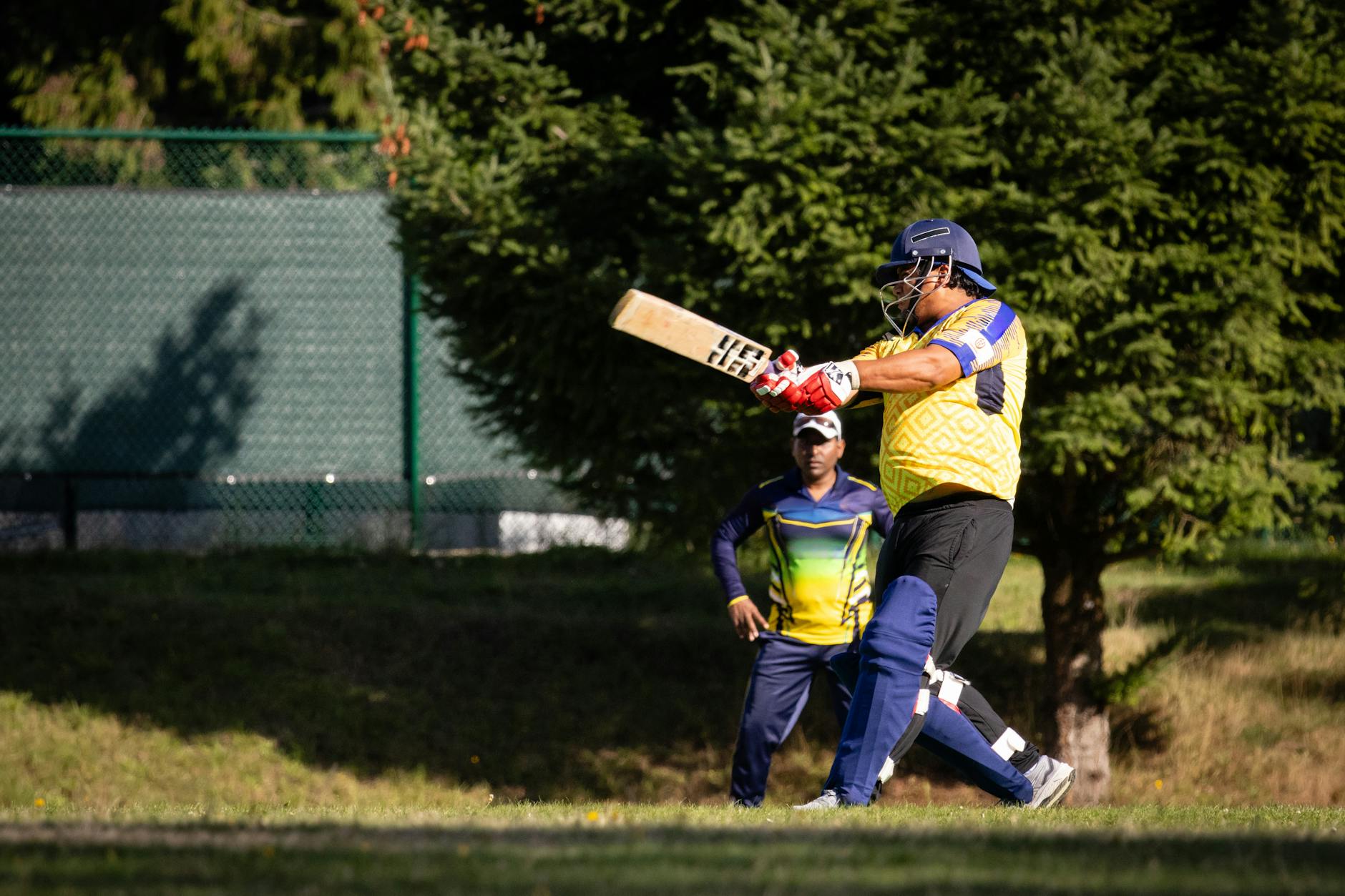
Traditional batting was largely built around patience and accumulating runs over long periods. T20 changed that equation. Batters began developing specialised skills designed to score quickly from the beginning of an innings. Shots over the infield, ramps, scoops and unconventional strokes became increasingly common as players searched for ways to exploit limited fielding restrictions.
The role of the opening batter also changed. Instead of simply surviving the early overs, openers were increasingly expected to attack immediately. A strong powerplay became a major competitive advantage, and teams began selecting batters specifically for their ability to maximise scoring opportunities during the first six overs.
The middle order evolved as well.
T20 created the modern finisher: a batter whose primary responsibility is to score rapidly during the final stages of an innings. These players are often judged less by traditional averages and more by their strike rate, boundary-hitting ability and capacity to perform under pressure.
Bowling underwent an equally significant transformation.
Fast bowlers developed specialised deliveries such as slower balls, wide yorkers and variations designed to prevent batters from clearing the boundaries. Death bowling became a specialist discipline, with certain bowlers building entire careers around the final overs of an innings.
Spin bowling also adapted.
Rather than simply attempting to take wickets through conventional turn and flight, spinners began using changes of pace, flatter trajectories and variations designed specifically for T20 conditions. Mystery spin, wrist-spin and unconventional variations became valuable weapons.
T20 also transformed fielding.
With fewer overs and greater emphasis on preventing boundaries, athletic fielding became essential. Teams began placing greater importance on speed, agility, catching ability and throwing accuracy. A spectacular boundary save could be worth as much as a wicket in a format where margins are extremely small.
The arrival of franchise cricket accelerated all of these changes.
The IPL provided players from different cricketing nations with an opportunity to play together regularly. A young Indian batter could share a dressing room with an Australian all-rounder, a South African fast bowler and a West Indian power hitter.
This created a global exchange of cricketing ideas.
Players learned new techniques from teammates and opponents, while coaches developed strategies based on conditions, matchups and player-specific strengths.
The IPL also changed the economics of the sport.
T20 cricket created new opportunities for players who may not have been ideally suited to Test cricket or traditional one-day cricket. Specialists could build successful careers around particular skills: power hitting, death bowling, finishing, wicketkeeping or fielding.
The rise of franchise leagues around the world followed.
Competitions such as Australia's Big Bash League, Pakistan Super League, Caribbean Premier League, SA20 and The Hundred expanded the professional T20 ecosystem. Players could now build careers across multiple leagues, while franchises could scout talent from virtually every major cricket-playing nation.
This created a new global cricket calendar.
International cricket was no longer the only pathway to financial success or professional recognition. Franchise cricket became a major part of the careers of many players.
T20 also changed captaincy.
In a five-day Test match, captains have time to respond to changing conditions. In T20, decisions have to be made almost immediately.
A single over can change the direction of a match.
Captains therefore became increasingly dependent on matchups and data. Which bowler should face a particular batter? When should a spinner be introduced? Should the captain hold a strike bowler back for the death overs? When should an attacking fielder be placed inside the circle?
These decisions can determine the result of a match within minutes.
The format also encouraged greater use of analytics.
Teams now analyse players in extraordinary detail. Batters are assessed against specific bowling types, while bowlers are evaluated according to phases of an innings and particular matchups.
This has gradually moved T20 cricket towards a more data-driven approach.
The modern T20 player is therefore expected to be more versatile than ever.
A batter who can bowl two useful overs becomes more valuable. A bowler who can contribute with the bat adds flexibility. A wicketkeeper who can open the batting provides another tactical option.
Teams increasingly look for players who can solve multiple problems.
What To Watch Next
The future of T20 cricket is likely to involve even greater specialisation.
Batters will continue developing new shots and techniques designed to attack specific bowling strategies. Bowlers will respond with increasingly sophisticated variations, while fielding standards are likely to continue improving.
Technology will also become more important.
Advanced analytics, performance tracking and video analysis already influence selection and tactics. As these tools become more sophisticated, teams will be able to make increasingly precise decisions about player roles and matchups.
Another major question is how T20 cricket will coexist with Test and ODI cricket.
The popularity and financial strength of franchise leagues have created new opportunities, but they have also increased pressure on players and international schedules. Cricket administrators face the challenge of maintaining the importance of international cricket while allowing franchise cricket to continue developing.
The growth of women's T20 cricket is another important part of the story.
Women's franchise competitions have provided professional opportunities for players and helped create new audiences for the women's game. The continued expansion of these tournaments could play a major role in the future development of women's cricket.
CricLove Verdict
T20 cricket has done far more than shorten the length of a cricket match.
It has changed batting techniques, bowling strategies, fielding standards, captaincy, player development, analytics and the economics of the sport.
The format has also changed what it means to be a professional cricketer. Players can now build careers around highly specialised T20 skills, while franchise leagues have created a global network in which knowledge and techniques move rapidly between countries.
What began as an experiment to make cricket faster and more accessible has become one of the central forces shaping the modern game.
T20 did not replace Test cricket or ODI cricket. Instead, it forced every format to evolve.
The game is now faster, more tactical, more specialised and more commercially driven than it was two decades ago. The evolution of T20 is therefore not simply the story of a new format.
It is the story of how an entire sport was transformed.